
What is a comprehensive eye exam?
A comprehensive eye exam goes well beyond checking whether you need glasses. Our optometrists assess the full health of your eyes — including screening for glaucoma, cataracts, macular degeneration, diabetic eye disease, and other conditions that often have no early symptoms.
Who should book: Adults every 1–2 years; children annually; patients with diabetes or family history of eye disease more frequently.
What to expect at your visit
- Health history review — medications, family history, any current symptoms
- Visual acuity test — reading the chart at distance and near
- Refraction — determining your lens prescription
- Eye pressure check — screening for glaucoma
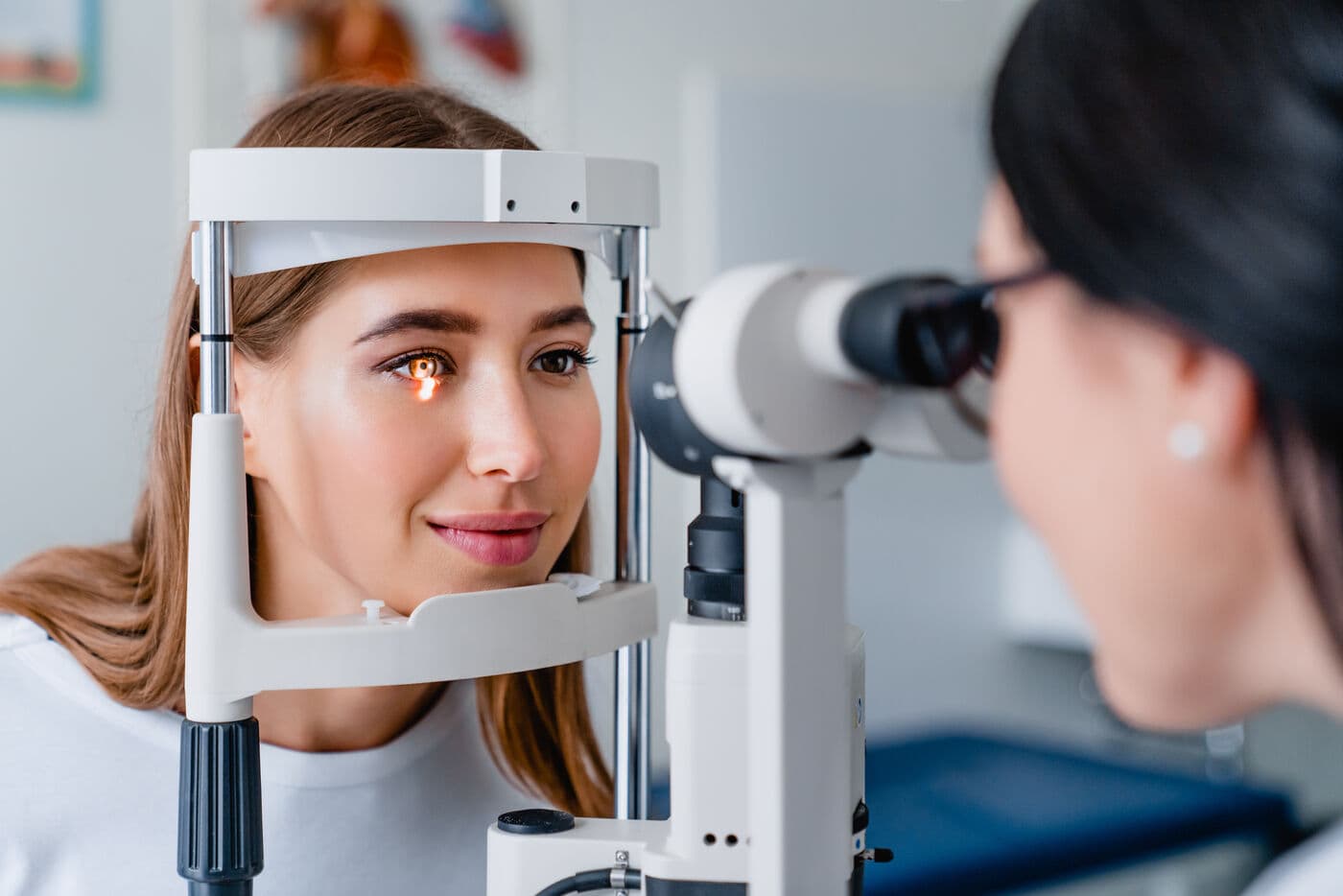
- Slit-lamp examination — detailed look at the front of the eye
- Dilated fundus exam — retinal and optic nerve health (dilation drops used)
Your vision may be blurry for a few hours after dilation.
What we check beyond vision
During your comprehensive exam we check more than just your prescription:
- Eye coordination and depth perception — how well your eyes work together
- Colour vision — assessed to detect deficiencies that may affect daily tasks or occupational requirements
- Eye pressure — screening for glaucoma
Your optometrist will also check for common eye diseases, including glaucoma, macular degeneration, cataracts, and retinal detachment. As ocular diseases progress gradually, early detection and treatment can mean all the difference in maintaining your vision.
Macular degeneration
The macula is the central part of the retina responsible for detailed central vision — used for reading, driving, and recognizing faces. Macular degeneration causes the centre of your vision to blur while peripheral vision remains unaffected. It is the leading cause of blindness in North America in adults over 55.
As we get older, the importance of monitoring vision changes grows. People age 65 and older should have a comprehensive eye exam at least once a year.
Technology we use
- OCT (Optical Coherence Tomography) — cross-sectional retinal imaging
- Optomap retinal imaging — ultra-widefield technology that captures 200 degrees of the retina (approximately 82%) in a single image, aiding early detection of retinal conditions such as diabetic retinopathy, macular degeneration, and retinal detachments that may not be visible with traditional methods
- Digital retinal photography — baseline images for year-over-year comparison
- Non-contact tonometry — eye pressure without numbing drops
Coverage & pricing
Alberta Health Care covers comprehensive eye exams for children under 19 and adults 65 and older. Adults aged 19–64 are typically covered through extended health benefits. Call us to confirm your coverage before your appointment.